CRASHRHINOCEROS
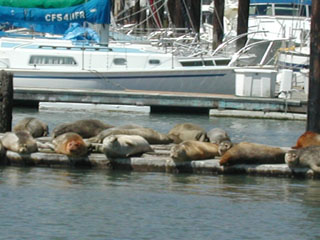
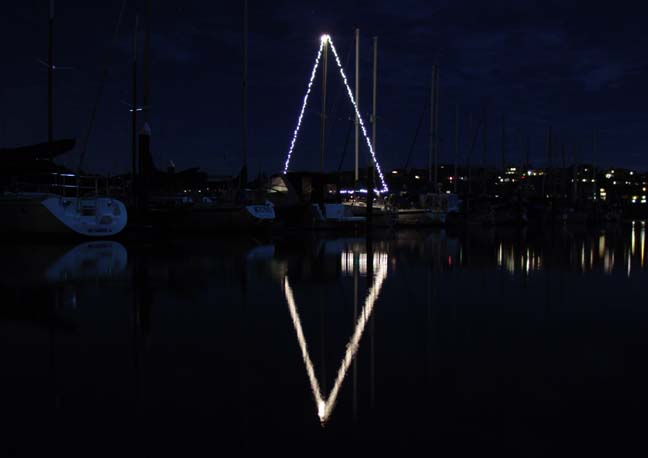
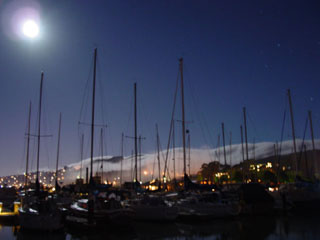
Panoramic view from the marina in Sausalito
BOAT LIFE · SAUSALITO

For seven years, home was a sailboat.

I didn’t set out to join an alternative-living movement. I was broke, needed somewhere else to live, and a friend looked around his family’s boat and said, “Yeah man, you should live on a boat.” So I did.

HOW THIS HAPPENED

I needed somewhere to live. A boat seemed reasonable.

Long before living in vans, tiny houses and boats became recognizable alternatives to conventional housing, I bought a sailboat because I desperately needed somewhere else to live.

I was in my late twenties, short on money, living in the bottom of my mother’s house, and trying to figure out what came next. My friend Paul was hanging out on his family’s Chris-Craft when he offered a remarkably straightforward solution:

“Yeah man, you should live on a boat.”

Within about a month I had researched boats, borrowed some money, found financing, and bought a 1974 Morgan Out Island 28. I knew very little about owning a sailboat and considerably less about living aboard one.

Then the education started: yards, haul-outs, through-hulls, weather, electricity, plumbing, engines, sails, storms, docks, neighbors, odd characters, and eventually actually learning to sail on San Francisco Bay because there was nobody else to do it.

(Special thanks to Crazy Richard.)

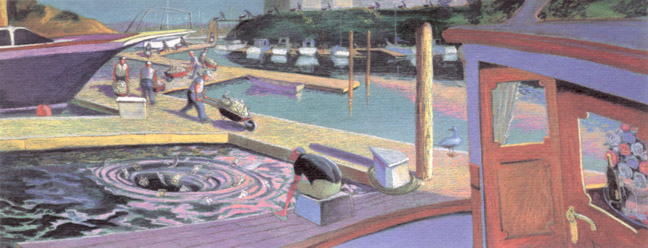
What Is A Boat artwork from the original Boat Life site
An artifact from the original Boat Life site.
THE PRACTICAL VERSION

So you want to live on a boat?

I originally wrote a full guide explaining why anyone would do this, what it actually cost, the different kinds of liveaboards, what kind of boat works, and the practical realities nobody thinks about until they are already standing on a dock.

Read “Live On A Boat!” →
THE BOATS

First I bought a home. Then I learned what kind of home I actually wanted.

THE FIRST BOAT
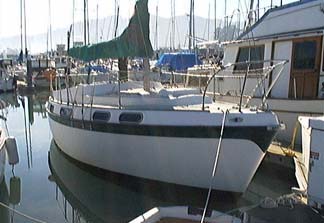
1974 Morgan Out Island 28 in her slip

1974 Morgan Out Island 28

This little boat was the gateway. Twenty-eight feet long, roughly nine feet wide, with enough headroom to stand up and just enough space to make an actual life. It wasn’t fancy. It was mine.

The first haul-out alone became an education: inspecting the hull, repairing things I barely understood, replacing a through-hull, and learning very quickly that boat ownership rewards people willing to figure things out.

THE SECOND BOAT
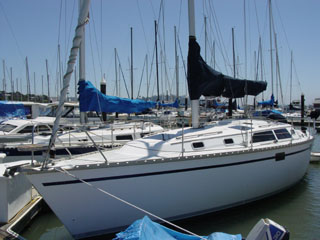
Hunter 335 at the dock

Hunter 335

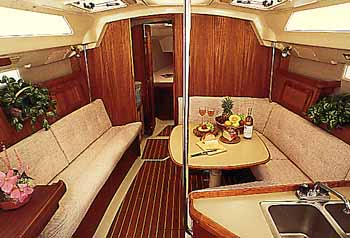
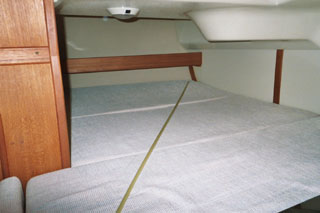
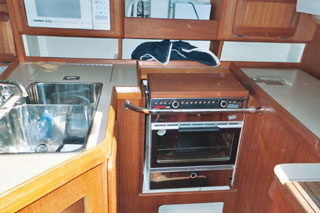
After years aboard the Morgan, I knew exactly what mattered in a liveaboard: usable interior volume, two real sleeping areas, better light, better sailing, and enough space that living aboard stopped feeling like fitting yourself into the boat.

The Hunter cost substantially more than the Morgan, but it was still dramatically cheaper than conventional housing in Sausalito—and a much better boat.

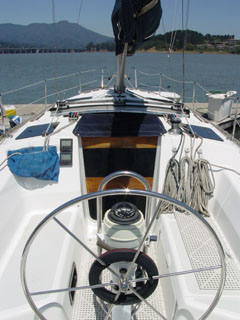
Hunter 335 salonHunter 335 aft stateroomHunter 335 galleySailboat cockpit
WHAT BOAT LIFE ACTUALLY LOOKED LIKE

It wasn’t a lifestyle brand. It was just life.

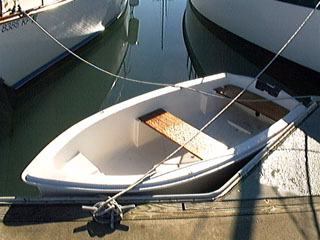
The old photographs are full of things that were completely ordinary at the time: waking up to the Bay, walking the docks, taking the dinghy for groceries, fixing whatever had decided to stop working, watching fog pour over the hills, and discovering that a marina has its own ecology of people and machines.

WHAT IT TAUGHT ME

I learned more about myself and life out there than almost anywhere else.

Own the problem.When your home floats, leaks, has an engine and depends on dozens of small systems, “somebody should fix that” is not much of a strategy.
Space changes priorities.Living in a few hundred square feet teaches you very quickly which possessions matter and which ones merely occupy volume.
Freedom has maintenance.The views, quiet and mobility were real. So were dock lines, zincs, bilge pumps, storms, electrical problems and things growing underwater.
People get interesting.Marinas collect characters. Sailors, mechanics, liveaboards, anchor-outs, retirees, eccentrics and people whose biographies rarely fit into a normal suburban box.
Learning compounds.Every repair made the next repair less intimidating. Every sail made the Bay more legible. Competence accumulated almost accidentally.
Different can be better.Conventional housing was supposed to be the normal solution. For seven years, this worked better for me.
FROM THE ORIGINAL BOAT ARCHIVE

And, naturally, there were stories.

I wrote a bunch of them while I was actually living there. The stories are now wrapped in the current site design, while the untouched originals remain preserved in the archive.

← Back to the main site